Key Takeaways
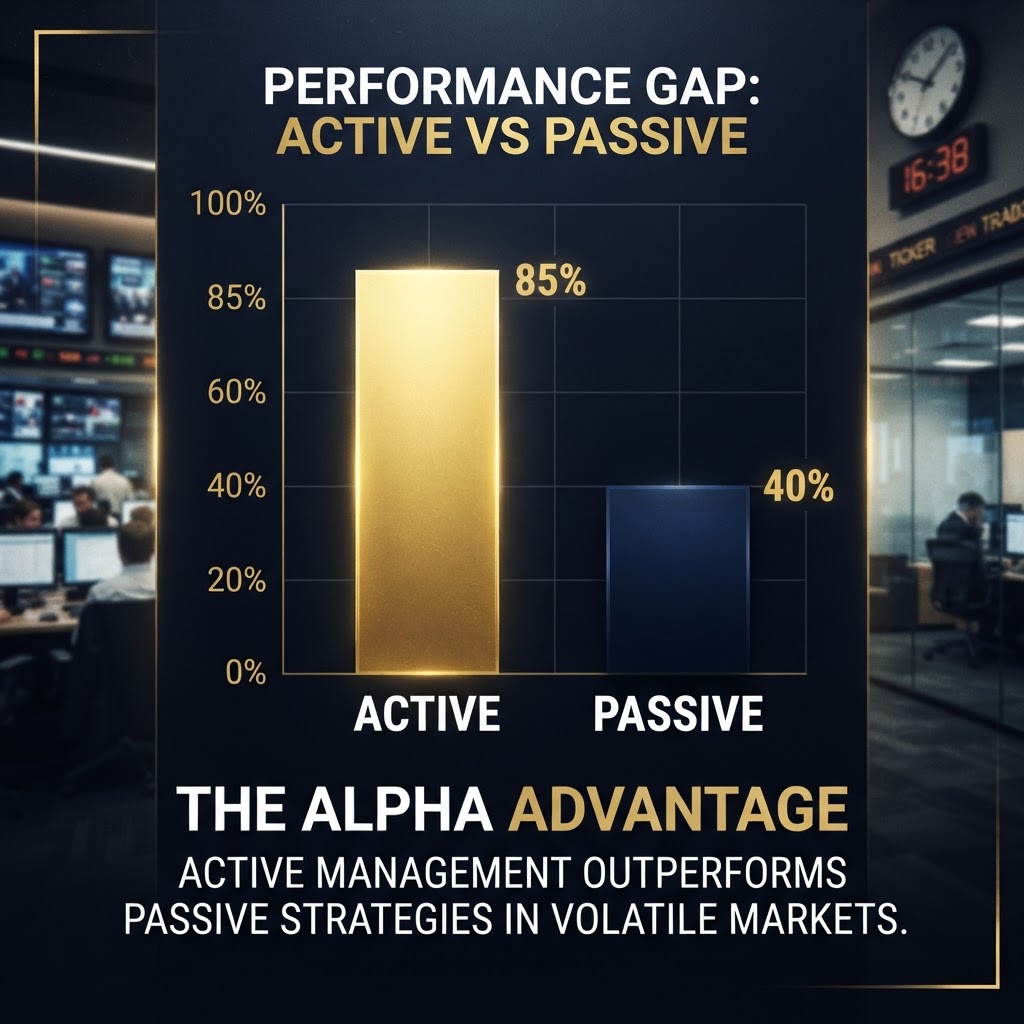
- Active mutual funds secured 81% of total NFO inflows during FY27.
- While passive funds dominated in terms of product quantity (63% of NFOs), they captured only 19% of total investment value.
- Active strategies attracted ₹14,200 crore, significantly outpacing the ₹3,200 crore generated by passive schemes.
- Investor preference remains anchored in the potential for alpha generation, even with higher expense structures.
What Happened
In a clear signal that the Indian retail and institutional investor base remains deeply committed to performance-driven management, active mutual funds have solidified their dominance in the current fiscal year. According to data reported by The Economic Times, active mutual funds captured 81% of all inflows from new fund offerings (NFOs) in FY27. Despite the mushrooming growth of passive products, which accounted for 63% of all new offerings, the actual capital allocation tells a contrasting story.
Investors poured ₹14,200 crore into active management strategies, while passive schemes, despite their growing popularity in product diversity, managed only ₹3,200 crore. This delta underscores a persistent gap between the proliferation of index-tracking products and the actual deployment of capital by investors.
Why It Matters
This trend reveals a nuanced divide in the Indian market. Passive funds, which typically seek to mirror index performance at a lower cost, are often preferred by institutional players looking for cost-efficient market exposure. However, the retail sentiment continues to favor active management. Many investors are explicitly opting for strategies where a fund manager's expertise is expected to yield greater returns, even if that comes at the cost of higher expense ratios.
The reliance on active funds suggests that for a significant portion of the Indian investor base, the goal is not merely matching the benchmark but attempting to beat it. The higher expense ratio associated with active funds is being viewed as a premium for professional alpha generation rather than a deterrent.
The Bigger Picture
While the passive wave is often cited as the future of global investing, the FY27 data from India suggests a slower, more deliberate transition. The dominance of active funds signifies that the "index-only" philosophy has yet to fully capture the Indian investor's imagination when it comes to new capital allocations. While passive funds gain ground in terms of variety and market availability, the conviction of the market participants is still heavily weighted toward the prospect of superior management outcomes.
What to Watch Next
As the industry evolves, the critical metric to watch will be whether the performance gap between active managers and market benchmarks narrows over time. Should active managers fail to consistently justify their higher expense ratios through superior returns, we may see a gradual drift of assets toward passive vehicles. For now, however, the human element of fund management remains the primary draw for the majority of mutual fund inflows.
⚠️ Disclaimer: IndiaMarketInsights.com is NOT a SEBI-registered Investment Adviser, Research Analyst, or Investment Advisory firm. This article is published for educational and informational purposes only and does not constitute investment advice, an offer to buy or sell, or a recommendation of any security or financial product. All data and information referenced is sourced from publicly available news and filings. Please consult a SEBI-registered investment advisor before making any investment decision. Past performance is not indicative of future results. Investing in securities involves risk, including possible loss of principal.