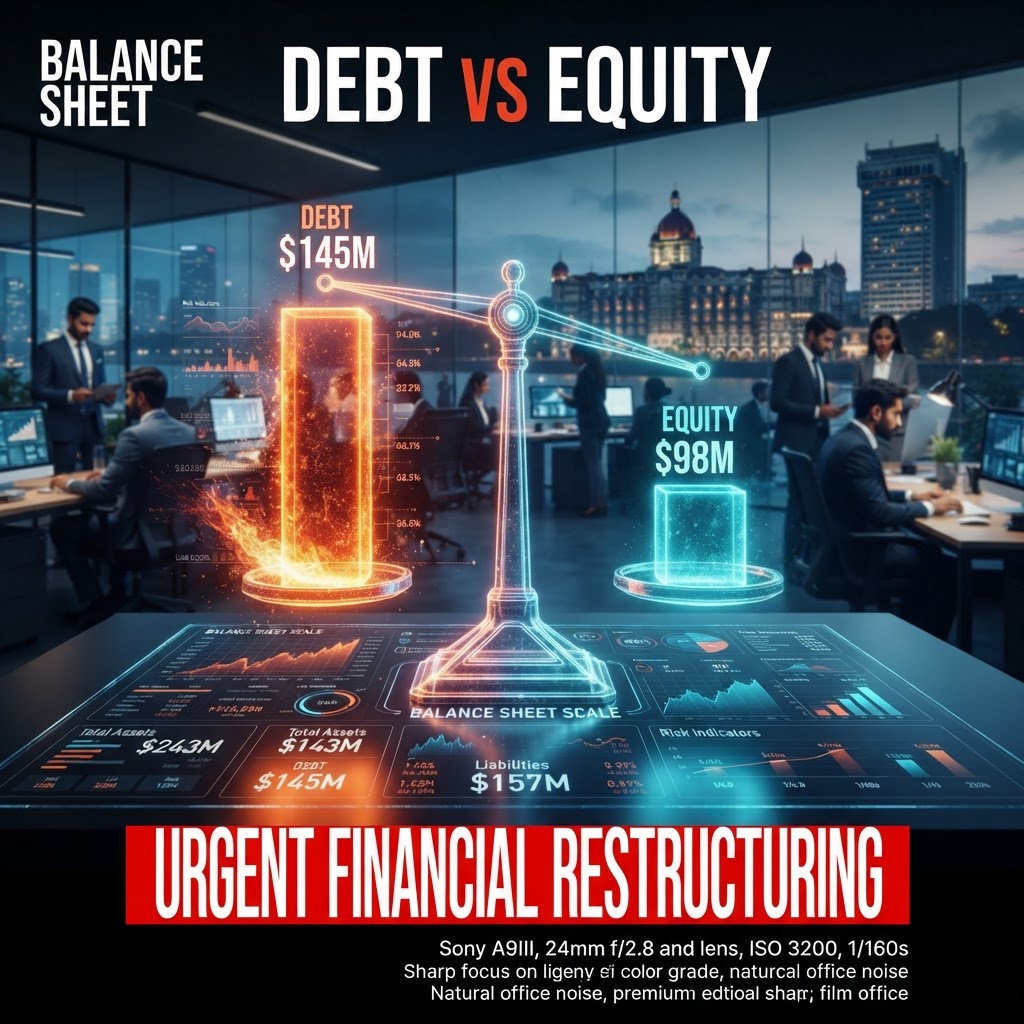
Debt-to-Equity Ratio: Decoding Financial Stability in Indian Equities
Key Takeaways
- The Debt-to-Equity (D/E) ratio measures the proportion of debt versus equity used to finance a company's assets.
- A high D/E ratio signals aggressive growth through borrowing, while a low ratio suggests a conservative financial structure.
- Sector-specific norms are crucial; capital-intensive industries naturally carry higher debt than service-oriented sectors.
- The ratio is a snapshot of leverage, not a standalone metric for investment success.
Understanding the Basics of Financial Leverage
For Indian retail investors, the balance sheet can often feel like a maze of accounting jargon. Among the many metrics, the Debt-to-Equity (D/E) ratio stands out as a critical indicator of a company’s financial health. It provides a window into how management funds the business—by relying on creditors or by using shareholders' capital.
At its core, the D/E ratio is calculated by dividing total liabilities by total shareholder equity. It answers a simple but vital question: for every rupee of equity provided by shareholders, how many rupees of debt has the company taken on to sustain its operations and growth?
The Anatomy of the Ratio
When analyzing the D/E ratio, context is the primary filter. A company with a high D/E ratio has a higher degree of financial leverage. While this can amplify returns during bullish cycles by allowing the company to expand faster, it also increases the interest burden. During economic downturns, high leverage becomes a significant risk factor, as fixed interest payments must be met regardless of operating cash flows.
Conversely, a low D/E ratio suggests a conservative approach. These companies are often viewed as 'safer' because they have less pressure to service debt. However, an excessively low ratio might also indicate that a company is underutilizing its growth potential by not deploying borrowed capital to scale its business.
Sectoral Context: Why 'One Size' Does Not Fit All
It is a common mistake for investors to compare the D/E ratios of companies across different industries. Capital-intensive sectors such as infrastructure, manufacturing, and power utility companies typically operate with high debt levels because of the massive upfront costs required for projects.
In contrast, sectors like IT services or FMCG usually maintain much lower D/E ratios due to their asset-light models and higher internal cash generation. When evaluating a stock, always compare its D/E ratio against its direct peers within the same industry to determine if the leverage level is typical or concerning.
The Bigger Picture: Leverage and Risk Management
Beyond the raw number, investors should examine the composition of the debt. Is the debt short-term or long-term? Are the interest rates floating or fixed? Companies with significant short-term debt might face liquidity risks if they cannot roll over their obligations, whereas long-term debt linked to sustainable infrastructure projects may be more manageable.
Furthermore, the D/E ratio should be analyzed alongside the Interest Coverage Ratio. While the D/E ratio tells you how much debt exists, the Interest Coverage Ratio tells you how easily the company can pay the interest on that debt. A firm might have high debt, but if it generates robust, consistent cash flows, the leverage might be entirely sustainable.
What to Watch Next
As interest rate cycles fluctuate, the cost of servicing debt changes for Indian corporations. Investors should monitor how management teams adjust their leverage in response to broader macroeconomic shifts. Moving forward, look for companies that demonstrate disciplined capital allocation—using debt to fund value-accretive growth rather than merely plugging operational shortfalls.
⚠️ Disclaimer: IndiaMarketInsights.com is NOT a SEBI-registered Investment Adviser, Research Analyst, or Investment Advisory firm. This article is published for educational and informational purposes only and does not constitute investment advice, an offer to buy or sell, or a recommendation of any security or financial product. All data and information referenced is sourced from publicly available news and filings. Please consult a SEBI-registered investment advisor before making any investment decision. Past performance is not indicative of future results. Investing in securities involves risk, including possible loss of principal.