Key Takeaways
- Emotional discipline is often more critical to long-term wealth creation than technical stock selection.
- Fear of Missing Out (FOMO) frequently leads to buying at market peaks, eroding long-term compounding.
- Panic selling during market corrections often results in crystallizing losses that could have been avoided with a long-term horizon.
- Establishing a rules-based investment framework is the most effective defense against cognitive biases.
The Silent Portfolio Killer
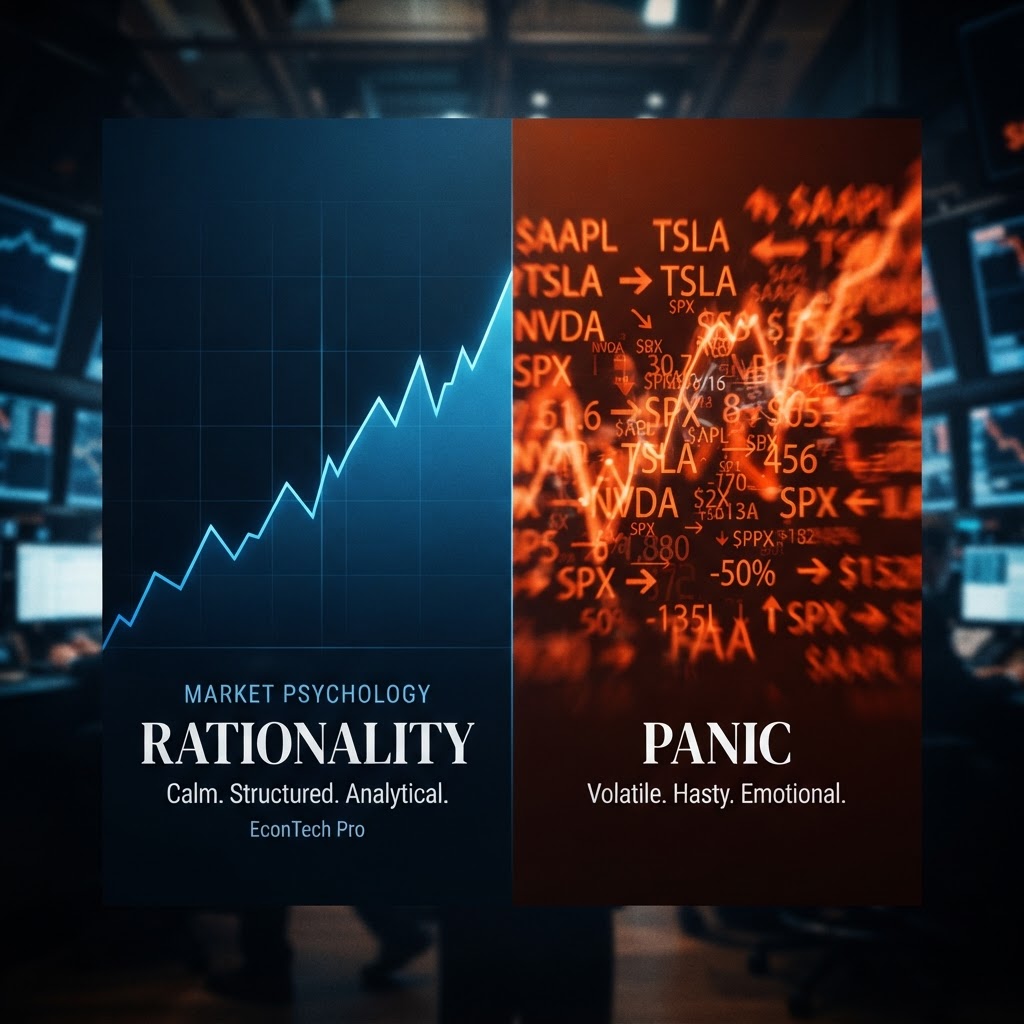
For the modern Indian retail investor, the primary threat to capital is rarely a lack of market data, but rather an excess of emotional influence. The psychology of investing dictates that our brains are hardwired for immediate survival, not for the patient, long-term accumulation of wealth. In volatile markets, this evolution-driven instinct often manifests as two destructive behaviors: the aggressive urge to join a rally (FOMO) and the impulsive desire to exit during a downturn (panic selling).
Understanding FOMO in the Indian Context
FOMO occurs when investors observe high-momentum rallies in specific sectors or small-cap stocks and feel a compulsive need to enter, fearing they are leaving money on the table. This psychological trap often blinds investors to fundamental valuations. By the time a retail investor decides to 'jump in' due to social validation or media buzz, the 'smart money' has often already begun its exit strategy. In the Indian markets, this cycle is frequently seen in overheated sectoral runs where price-to-earnings multiples become detached from historical norms.
The Peril of Panic Selling
Conversely, panic selling is the flip side of the same emotional coin. When news cycles turn negative, the instinct to protect remaining capital often overrides the logic of staying invested. Panic selling locks in losses that are often temporary. Historically, the Indian equity markets have shown resilience, but those who exit during periods of extreme fear miss the subsequent recovery phase, which often begins when investor sentiment is at its absolute nadir.
The Bigger Picture: Building a Behavioral Framework
Success in the stock market requires a deliberate decoupling of your investment strategy from your emotional state. Retail investors who succeed often do so not by timing the market, but by automating their contributions through vehicles like Systematic Investment Plans (SIPs). By smoothing out the cost of acquisition over time, the 'cost' of an emotional mistake is significantly reduced.
What to Watch Next
As market volatility becomes a constant feature of the Indian landscape, investors should focus on maintaining a 'readiness plan.' This involves defining your risk tolerance before a market dip occurs, not during one. Reviewing your asset allocation quarterly and ensuring it aligns with your long-term goals is a practical way to replace anxiety with analysis.
⚠️ Disclaimer: IndiaMarketInsights.com is NOT a SEBI-registered Investment Adviser, Research Analyst, or Investment Advisory firm. This article is published for educational and informational purposes only and does not constitute investment advice, an offer to buy or sell, or a recommendation of any security or financial product. All data and information referenced is sourced from publicly available news and filings. Please consult a SEBI-registered investment advisor before making any investment decision. Past performance is not indicative of future results. Investing in securities involves risk, including possible loss of principal.