Key Takeaways
- Foreign Institutional Investors (FIIs) act as significant liquidity providers in the Indian equity market, making their buying and selling patterns influential.
- Market volatility is often a function of FII asset allocation shifts, which are influenced by global macro factors like US interest rates and dollar strength.
- Unlike retail investors, FIIs often trade in large blocks, which can exacerbate price movements during periods of market stress.
- Understanding the 'why' behind FII outflows is more critical for long-term investors than reacting to daily price fluctuations.
The Mechanics of FII Influence
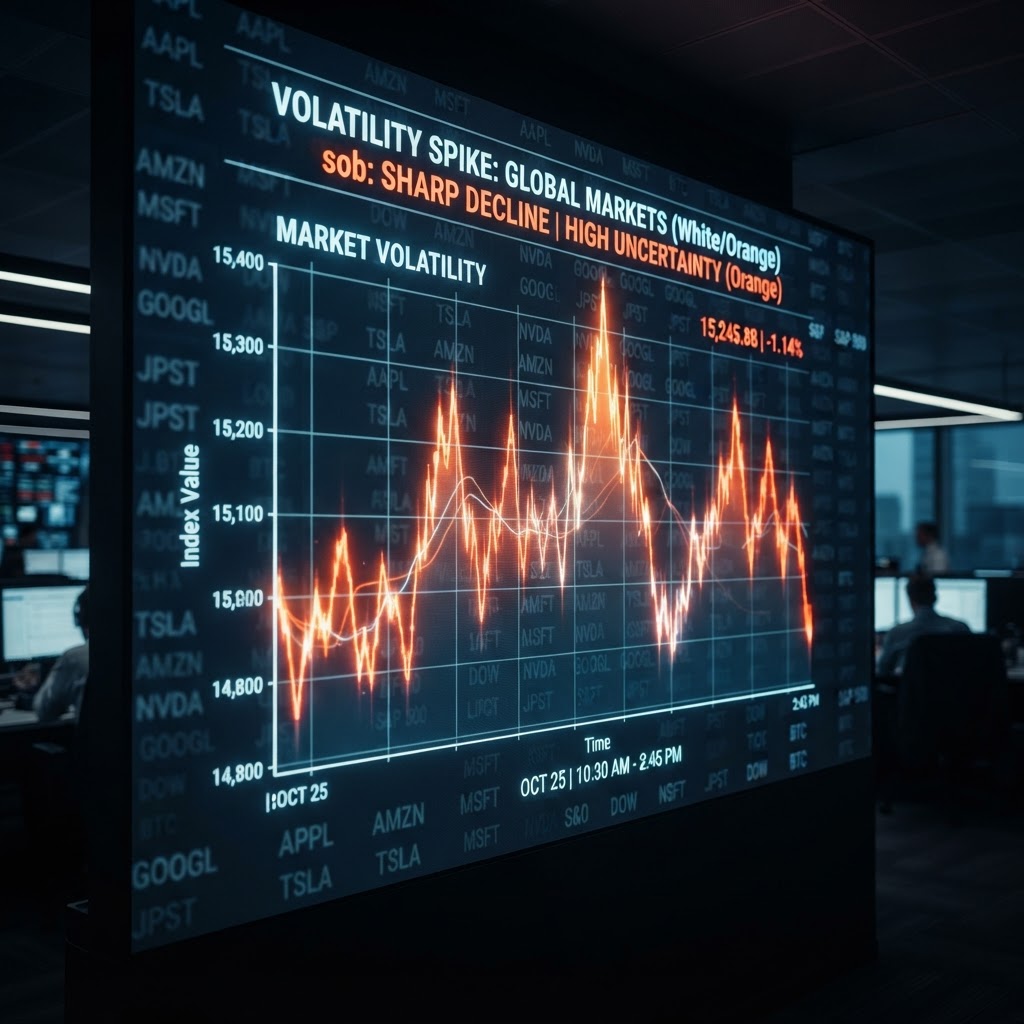
Foreign Institutional Investors (FIIs) play a pivotal role in shaping the daily landscape of the Indian stock market. By deploying vast amounts of capital into large and mid-cap stocks, these entities provide the liquidity that keeps the market dynamic. However, this same liquidity can become a catalyst for volatility when the sentiment shifts.
When FIIs decide to adjust their portfolios, they do so at a scale that domestic participants—both retail and institutional—often find difficult to absorb instantly. This mismatch in scale is the primary engine of volatility. Because FIIs often treat India as part of an 'Emerging Markets' basket, their decisions are frequently driven by global macroeconomic developments rather than domestic stock-specific fundamentals alone.
Why FII Flows Drive Volatility
Volatility arises when supply and demand dynamics are disrupted. When FIIs engage in aggressive selling, they create a 'liquidity vacuum.' As they offload shares in bulk, the order books of major indices like the Nifty 50 and S&P BSE Sensex witness significant downward pressure. This triggers algorithmic trading systems and stops, which can further accelerate the downward movement.
It is important to recognize that FIIs are not a monolith. Pension funds, hedge funds, and sovereign wealth funds all have different mandates. A hedge fund may trade on short-term momentum, leading to rapid exits during global market uncertainty, while a long-term sovereign fund might view market dips as an opportunity to accumulate quality assets. Recognizing that these 'hot' and 'cold' money flows coexist helps investors look past the noise of daily net selling figures.
The Bigger Picture: Global vs. Domestic Sentiments
For the Indian retail investor, the most critical lesson is understanding that FII-driven volatility is often a reflection of global 'risk-on' or 'risk-off' sentiment. Factors such as the movement of the US Dollar Index (DXY) or shifts in US Treasury yields often act as lead indicators. When global liquidity tightens, capital tends to rotate away from emerging markets back into the safety of the US dollar. Consequently, selling in the Indian market may occur regardless of how well an Indian company is performing operationally.
This creates a disconnect where a fundamentally strong company might see its share price plummet simply because it is part of an index being liquidated by foreign funds to meet redemption requirements elsewhere. Savvy investors analyze these movements as potential temporary dislocations rather than structural changes in business value.
What to Watch Next
As the Indian equity market continues to mature with higher domestic participation, the relative impact of FII flows is expected to evolve. Investors should monitor FII net buying and selling data not as a signal to trade, but as a contextual gauge of current market sentiment. Over the long term, corporate earnings growth and domestic economic health remain the primary drivers of wealth creation. FII-driven volatility is merely the tax one pays for participating in a liquid, globalized market.
⚠️ Disclaimer: IndiaMarketInsights.com is NOT a SEBI-registered Investment Adviser, Research Analyst, or Investment Advisory firm. This article is published for educational and informational purposes only and does not constitute investment advice, an offer to buy or sell, or a recommendation of any security or financial product. All data and information referenced is sourced from publicly available news and filings. Please consult a SEBI-registered investment advisor before making any investment decision. Past performance is not indicative of future results. Investing in securities involves risk, including possible loss of principal.