Key Takeaways
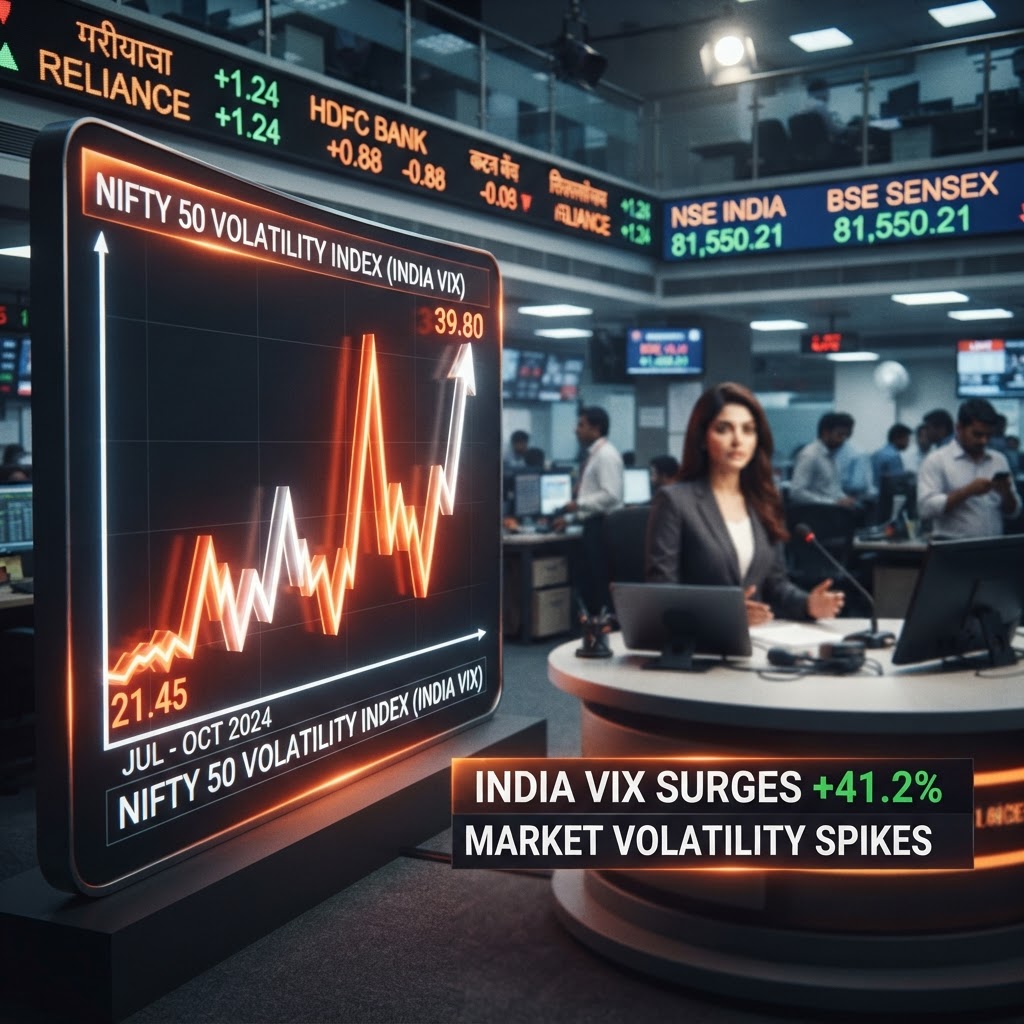
- The VIX measures expectation: The India VIX represents the market's expectation of volatility over the next 30 days based on Nifty 50 index option prices.
- Volatility is not direction: A high VIX does not necessarily mean the market will crash; it indicates that traders expect larger price swings in either direction.
- The Fear Gauge: Often termed the 'fear gauge,' it is a contrarian indicator that can help investors gauge market sentiment during periods of uncertainty.
- Premium pricing: Higher VIX levels typically lead to more expensive option premiums, influencing hedging and speculative costs for traders.
What is the India VIX?
The India VIX, or Volatility Index, is a numerical representation of the market's expectation of volatility over the coming 30 days. It is calculated using the order book of Nifty 50 index options. When the India VIX rises, it signifies that market participants are bracing for more significant price fluctuations, whether those swings are to the upside or the downside.
Unlike an index that tracks the price of stocks, the India VIX tracks the 'temperature' of the market. It effectively distills the uncertainty reflected in option premiums into a single, digestible percentage figure. Understanding this index is crucial for any retail investor who wants to move beyond simply looking at the Nifty 50's daily price movement.
Why It Matters: Parsing Market Sentiment
The India VIX is frequently referred to as the 'fear gauge.' This nickname stems from the historical correlation where spikes in volatility often coincide with market corrections. When investors are fearful or uncertain, they often buy protective 'put' options, which drives up the cost of options and, consequently, pushes the India VIX higher.
However, it is a mistake to view the VIX as a simple prediction tool. A rising VIX simply shows that options are getting more expensive because traders are paying more to hedge their portfolios or speculate. It reflects a collective jumpiness in the market rather than a specific forecast of a crash.
The Bigger Picture: Volatility as a Tool
For retail investors, the India VIX serves as a powerful context setter. During periods of extreme greed, the VIX often hits historically low levels, indicating a sense of complacency. Conversely, when the VIX is at elevated levels, it signals that the market is in a state of high tension.
Seasoned investors often use the VIX to adjust their strategies. During high-VIX environments, option premiums are 'inflated,' making it potentially more expensive for traders to hedge positions, but potentially more attractive for those selling volatility. By keeping an eye on where the VIX sits relative to its long-term average, investors can better understand if the current market movement is driven by panic, excitement, or standard price discovery.
What to Watch Next
Moving forward, investors should watch how the India VIX reacts during major events, such as union budget announcements or significant policy shifts by the Reserve Bank of India. While the VIX provides a window into market sentiment, it should be used in conjunction with fundamental analysis rather than as a standalone timing device. Remember, high volatility can be a source of risk for short-term traders but a source of opportunity for long-term investors looking to build positions in quality assets.
⚠️ Disclaimer: IndiaMarketInsights.com is NOT a SEBI-registered Investment Adviser, Research Analyst, or Investment Advisory firm. This article is published for educational and informational purposes only and does not constitute investment advice, an offer to buy or sell, or a recommendation of any security or financial product. All data and information referenced is sourced from publicly available news and filings. Please consult a SEBI-registered investment advisor before making any investment decision. Past performance is not indicative of future results. Investing in securities involves risk, including possible loss of principal.