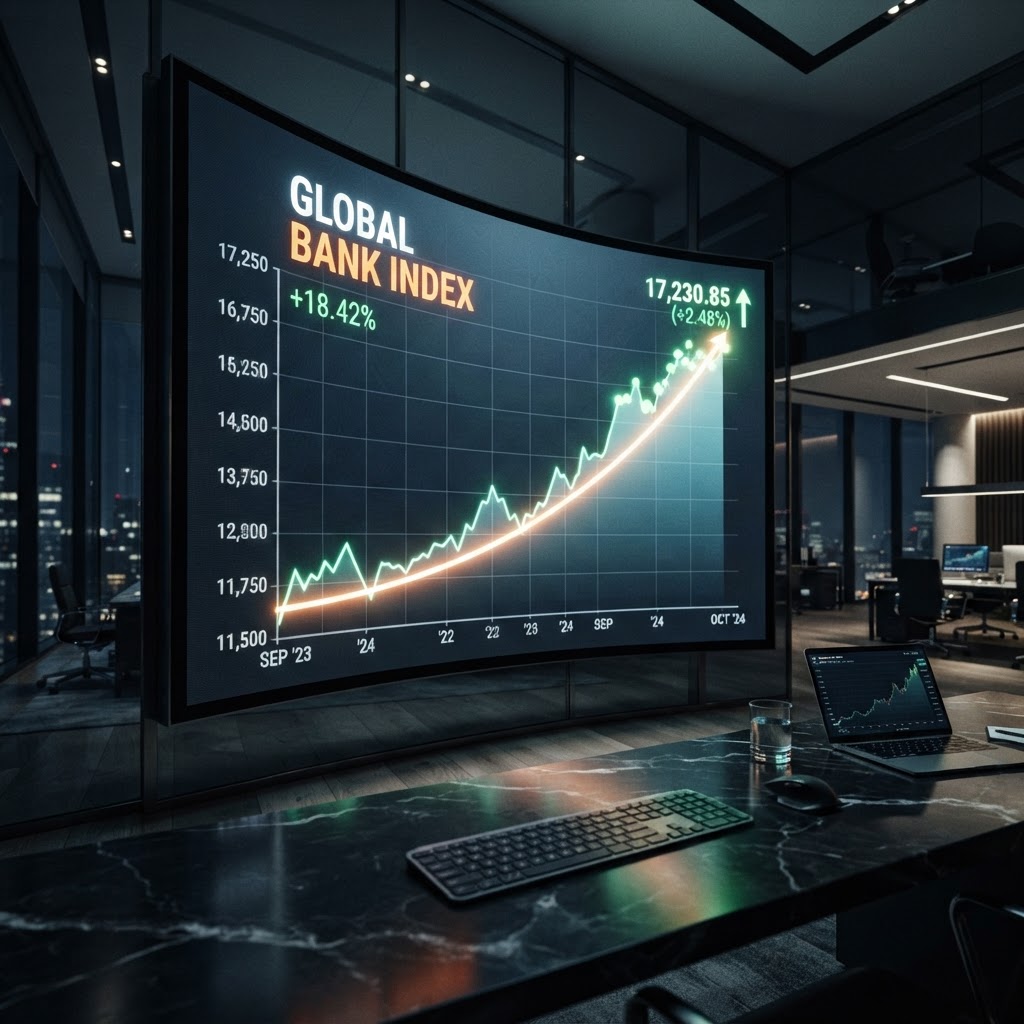
Key Takeaways
- The Nifty Bank Index serves as a critical barometer for the health of India's banking and financial services sector.
- Index movements are driven by a concentrated list of large-cap private and public sector banks, making it highly sensitive to sector-specific policy shifts.
- Understanding its composition helps investors analyze broader economic trends, as banking performance is often a proxy for national credit growth.
What Drives the Nifty Bank Index?
The Nifty Bank Index is a thematic benchmark designed to reflect the performance of the most liquid and large-cap stocks in the Indian banking sector. Unlike the broader Nifty 50, which captures a cross-section of the entire economy, the Nifty Bank Index is hyper-focused. Its movements are dictated by the collective stock price action of its constituent banks, which are weighted based on free-float market capitalization.
Because the index is dominated by a small number of large players, the weightage of individual stocks plays a massive role in volatility. When a major private sector lender in the index announces a shift in its credit growth strategy or faces regulatory scrutiny, the index often experiences significant price swings. Factors such as Reserve Bank of India (RBI) interest rate decisions, liquidity conditions in the interbank market, and quarterly earnings reports regarding Net Interest Margins (NIMs) are the primary engines behind daily index activity.
Why the Index Matters
The banking sector is the engine of the Indian economy. Because banks act as intermediaries between savers and borrowers, the Nifty Bank Index provides real-time sentiment on the credit cycle. When the index trends upward, it often suggests a positive outlook for credit expansion, industrial investment, and retail spending. Conversely, a sustained decline may signal concerns regarding asset quality, rising Non-Performing Assets (NPAs), or tightening credit conditions.
For retail investors, the Nifty Bank Index is not just a collection of stocks—it is a gauge for economic velocity. Since capital-intensive sectors like real estate, auto, and manufacturing rely heavily on bank credit, the performance of the banking index often leads the broader market. Tracking this index allows investors to understand the financial 'temperature' of the nation before it fully reflects in the broader Nifty 50 indices.
The Bigger Picture: Correlation and Sentiment
The Nifty Bank Index also has a high beta compared to the broader market, meaning it tends to amplify the movements of the overall indices. During periods of risk-on sentiment, foreign institutional investors (FIIs) often pour capital into the large-cap banks listed in the index, driving sharp rallies. During market corrections, these same stocks are often the first to face selling pressure due to their liquidity and high visibility.
Furthermore, the index serves as a regulatory bellwether. Changes in the Cash Reserve Ratio (CRR) or Statutory Liquidity Ratio (SLR) directly impact the cost of funds for the banks within the index. As these banks adjust their base lending rates in response, the Nifty Bank Index acts as the front line of reaction to monetary policy transmission.
What to Watch Next
Investors should monitor upcoming RBI monetary policy committee (MPC) meetings and the subsequent management commentary from the major banking constituents. Pay close attention to credit growth data and commentary on loan books, as these are the primary fundamentals that dictate the long-term trend of the index. While short-term volatility is common, the long-term health of the index remains tethered to the underlying balance sheets of India's top financial institutions.
⚠️ Disclaimer: IndiaMarketInsights.com is NOT a SEBI-registered Investment Adviser, Research Analyst, or Investment Advisory firm. This article is published for educational and informational purposes only and does not constitute investment advice, an offer to buy or sell, or a recommendation of any security or financial product. All data and information referenced is sourced from publicly available news and filings. Please consult a SEBI-registered investment advisor before making any investment decision. Past performance is not indicative of future results. Investing in securities involves risk, including possible loss of principal.