Key Takeaways
- IPOs are divided into distinct investor categories: QIBs, NIIs, and Retail.
- Allocation quotas ensure that institutional capital and individual wealth are balanced during the public offer process.
- Understanding these segments helps retail investors interpret subscription trends and potential listing day volatility.
When a company goes public in India, the process is governed by a structured allocation framework designed by SEBI. For the average retail investor, navigating the alphabet soup of IPO categories—QIB, NII, and Retail—is the first step toward understanding market sentiment and bid success. Each category represents a different segment of the financial ecosystem, and each carries its own set of rules regarding eligibility and bidding size.
Breaking Down the Investor Categories
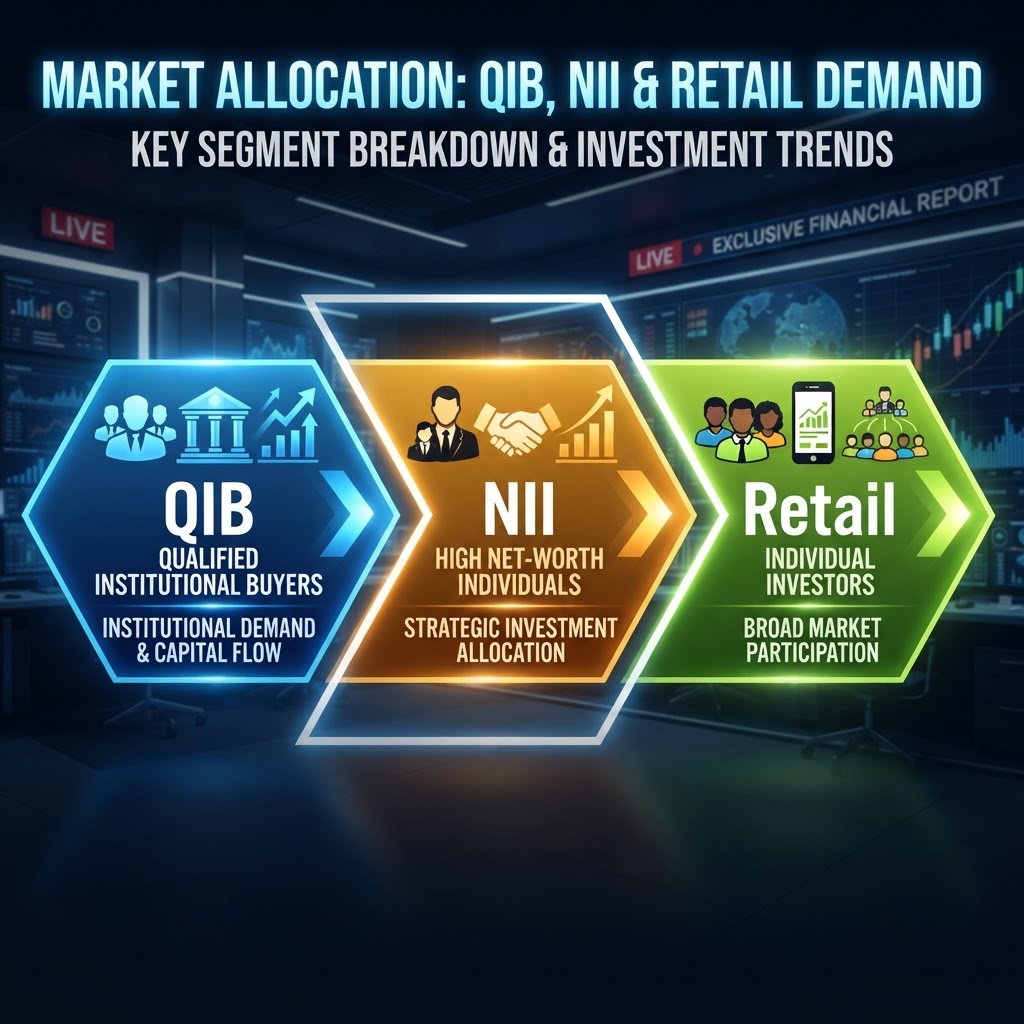
Qualified Institutional Buyers (QIBs) QIBs are the heavyweights of the market. This category typically includes commercial banks, foreign portfolio investors (FPIs), mutual funds, and insurance companies. Because these entities have the capital and the mandate to perform extensive due diligence, they are often viewed as the 'smart money' in an IPO. They are generally allotted the largest portion of the total issue size, and their subscription levels are a primary indicator of institutional confidence in the company's valuation.
Non-Institutional Investors (NIIs) Often referred to as the High Net-worth Individual (HNI) category, NIIs include individuals, HUFs, companies, and trusts that apply for shares worth more than Rs 2 lakh. This segment sits between the massive institutional giants and the smaller retail investors. The NII category is often characterized by significant activity from leveraged players who borrow funds to bid for large volumes, which can lead to dramatic fluctuations in subscription data toward the end of the IPO period.
Retail Individual Investors (RIIs) Retail investors are individuals who apply for shares worth up to Rs 2 lakh. This is the bedrock of the Indian public offer ecosystem. By regulatory design, a significant portion of the IPO is reserved specifically for this category to ensure that individual participation is encouraged. Retail investors are restricted by the Rs 2 lakh limit; any bid exceeding this amount is automatically reclassified as an NII bid.
Why the Quota Matters
These categories are not just administrative labels; they dictate the 'oversubscription' narrative. When news reports highlight that an IPO was 'subscribed 50 times,' the devil is in the details of the breakdown. If QIBs are heavily subscribed, it suggests long-term conviction from institutional research desks. If the NII portion is volatile, it may reflect speculative interest driven by short-term listing gains. Analyzing these buckets allows investors to look past the headline number and understand who is actually funding the company's entry into the public markets.
The Bigger Picture: Regulatory Intent
SEBI’s rigid segmentation of these quotas serves a vital purpose: market stability. By mandating that a specific percentage of shares must go to retail investors, the regulator prevents institutional players from crowding out the public. Conversely, by reserving a large chunk for QIBs, the system ensures that the company’s capital structure is anchored by sophisticated, long-term investors. For the retail investor, the goal is to observe the interplay between these segments. A healthy, balanced subscription across all three categories is traditionally viewed as a sign of a well-priced, well-received offer.
What to Watch Next
As you monitor upcoming IPOs, pay close attention to the 'Anchor Investor' portion. Anchor investors are a subset of QIBs that are allotted shares a day before the IPO opens. Their participation is often interpreted as a bellwether for the rest of the institutional segment. While subscription numbers fluctuate daily, tracking the momentum in the QIB category relative to the retail bucket often provides the most nuanced view of how the market is pricing the opportunity.
⚠️ Disclaimer: IndiaMarketInsights.com is NOT a SEBI-registered Investment Adviser, Research Analyst, or Investment Advisory firm. This article is published for educational and informational purposes only and does not constitute investment advice, an offer to buy or sell, or a recommendation of any security or financial product. All data and information referenced is sourced from publicly available news and filings. Please consult a SEBI-registered investment advisor before making any investment decision. Past performance is not indicative of future results. Investing in securities involves risk, including possible loss of principal.