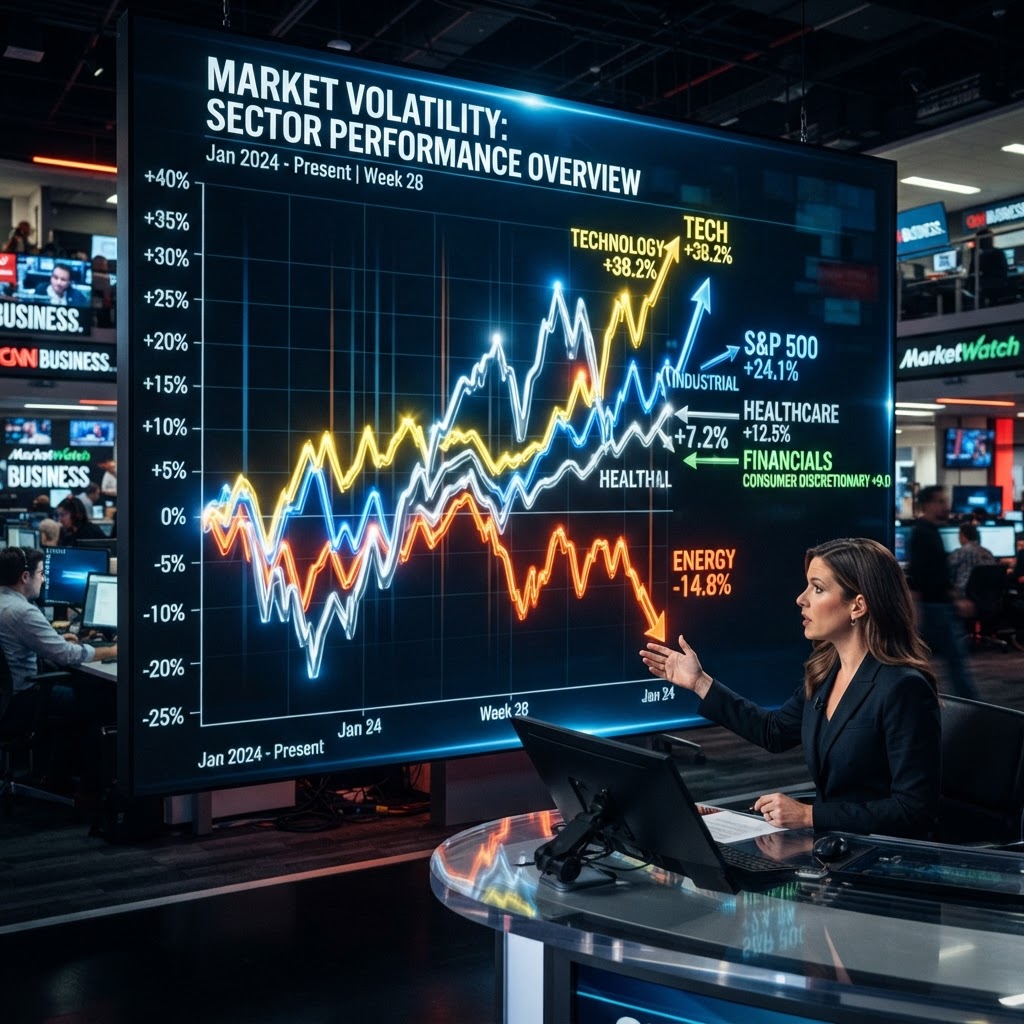
Key Takeaways
- Sector rotation involves shifting capital from one industry to another based on prevailing macroeconomic cycles.
- Understanding the relationship between economic growth, interest rates, and specific sectors is vital for risk management.
- Defensive sectors often outperform during downturns, while cyclical sectors thrive during expansionary phases.
- Monitoring market leadership shifts provides critical context for portfolio diversification.
The Mechanics of Market Leadership
Sector rotation in the Indian stock market is the process by which investors and institutions move capital between different industry groups in response to shifting economic conditions. Rather than focusing solely on individual stock picking, this strategy acknowledges that different segments of the economy—such as banking, information technology, energy, or consumer goods—react uniquely to the broader business cycle.
At its core, sector rotation reflects the market’s collective assessment of where the economy is headed. When sentiment shifts from growth-oriented optimism to risk aversion, capital often flows out of high-beta, cyclical sectors and into defensive, stable industries. Recognizing these patterns allows participants to understand the structural shifts occurring within the broader indices.
Why Sector Rotation Matters for Portfolio Health
In the Indian context, sector rotation is frequently influenced by interest rate cycles, government policy shifts, and global commodity price trends. For example, when the Reserve Bank of India (RBI) enters a rate-hike cycle, the banking sector may experience margin pressures, while certain capital-intensive sectors might see borrowing costs rise, leading to a reallocation of investor interest.
Analyzing these movements is essential because no single sector outperforms indefinitely. Concentrating a portfolio in one area ignores the cyclical nature of demand and earnings growth. By understanding sector rotation, investors gain a framework to evaluate why certain segments of the NSE and BSE experience volatility while others remain resilient. It provides a lens to observe whether current market moves are driven by fundamental economic data or temporary sentiment shifts.
Analyzing the Economic Cycle
Broadly, market watchers identify two major categories: cyclical and defensive sectors. Cyclical sectors—such as automobiles, real estate, and financial services—are highly sensitive to the health of the economy. During periods of robust GDP growth and rising consumer confidence, these sectors typically command higher valuations.
Conversely, defensive sectors like FMCG (Fast Moving Consumer Goods), pharmaceuticals, and utilities often exhibit lower sensitivity to economic fluctuations. These industries tend to provide stable cash flows, making them attractive during periods of market uncertainty or economic deceleration. Observing the flow of funds between these two buckets is a primary tool for gauging overall market risk appetite.
What to Watch Next: Gauging Structural Shifts
As the Indian markets evolve, investors should monitor key indicators such as sectoral index performance relative to the Nifty 50 or Sensex. Sudden, persistent divergence between a specific sector and the broader index often signals a rotation. Key drivers to track include the direction of inflation, sovereign bond yields, and quarterly earnings trends, which dictate how institutional capital is deployed across the board.
Understanding these rotations does not require predicting the future; it requires an objective assessment of the current economic environment. By observing which sectors are drawing institutional interest and which are seeing outflows, market participants can better understand the underlying momentum driving the Indian equity landscape.
⚠️ Disclaimer: IndiaMarketInsights.com is NOT a SEBI-registered Investment Adviser, Research Analyst, or Investment Advisory firm. This article is published for educational and informational purposes only and does not constitute investment advice, an offer to buy or sell, or a recommendation of any security or financial product. All data and information referenced is sourced from publicly available news and filings. Please consult a SEBI-registered investment advisor before making any investment decision. Past performance is not indicative of future results. Investing in securities involves risk, including possible loss of principal.