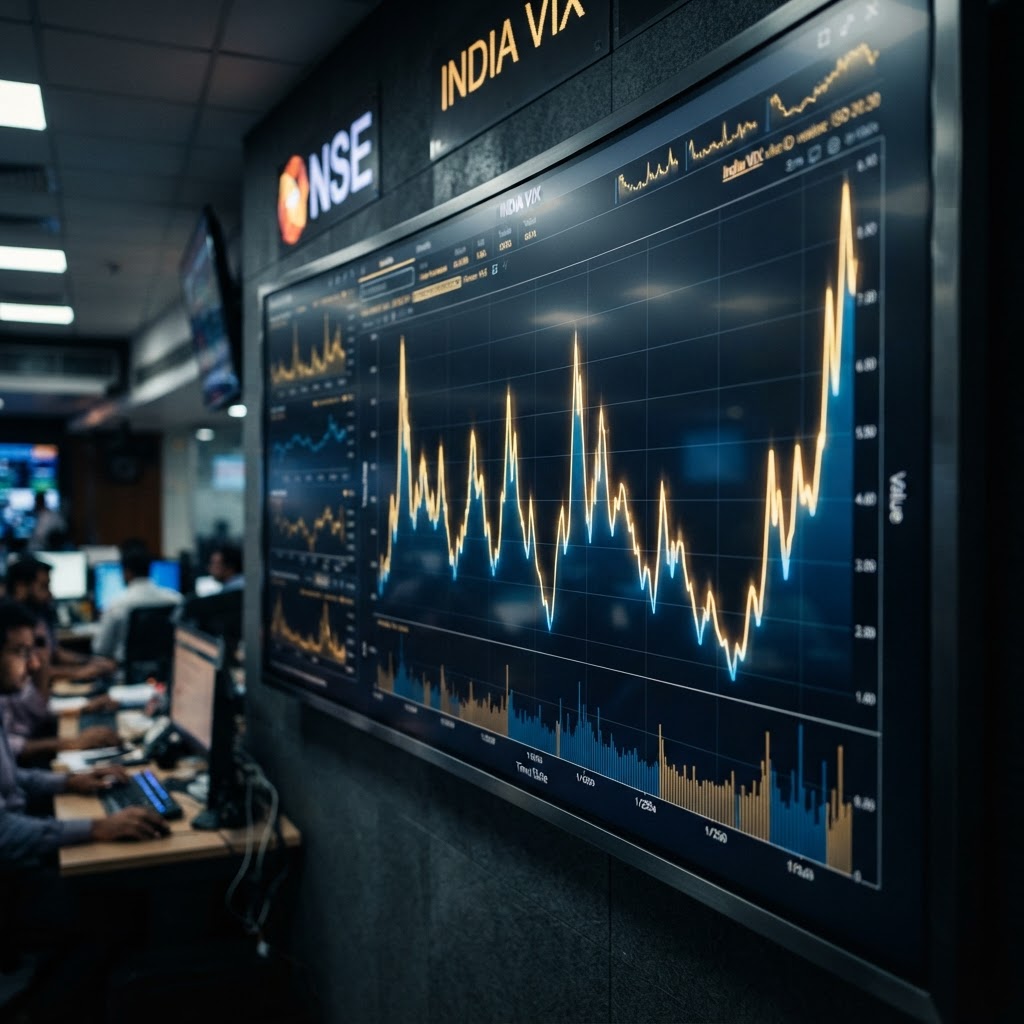
Key Takeaways
- The India VIX is a volatility index representing the market's expectation of volatility over the next 30 days.
- It is derived from the order book of Nifty 50 index options, serving as a 'fear gauge' for retail and institutional investors alike.
- High VIX values typically indicate higher perceived risk, while low values suggest market complacency.
- Understanding VIX is essential for risk management, as it directly impacts the pricing of derivatives.
What is the India VIX?
The India VIX, or Volatility Index, serves as one of the most vital barometers for tracking sentiment within the Indian stock market. Often referred to as the 'fear gauge,' it provides a quantified measure of the market's expectation of volatility over the coming 30 days. Unlike standard indices that track price movement, the VIX tracks the 'expected' fluctuations based on the premium investors are willing to pay for Nifty 50 options.
Why It Matters: The Mechanics of Market Fear
When the India VIX rises, it indicates that the market expects significant price swings in the near term. This usually occurs when investors are uncertain about the future direction of the market, leading them to pay higher premiums for put options as a hedge against potential downside. Conversely, a falling VIX suggests that market participants are feeling more comfortable, leading to a contraction in option premiums.
For the retail investor, the VIX is not a predictor of market direction but rather a measure of market temperature. It represents the collective anxiety or confidence of the trading community. Recognizing this distinction is crucial; a rising VIX does not necessarily mean the market will crash, but it does mean the market is bracing for more intense movement.
The Bigger Picture: Correlation and Sentiment
Historically, the India VIX exhibits a negative correlation with the Nifty 50 index. When the market trends upward in a stable environment, the VIX tends to drift lower. When panic sets in or when major macroeconomic events loom, the index tends to spike. This relationship is a staple of financial analysis, helping market participants gauge whether the prevailing market sentiment is characterized by optimism or apprehension.
What to Watch Next
As an investor, monitoring the VIX alongside major policy announcements, earnings seasons, and global geopolitical events can provide a clearer picture of market health. Rather than using the VIX as a timing tool for individual stock picks, look at it as a risk-assessment indicator for your portfolio. When volatility is expected to be high, professional market participants often lean toward more conservative strategies. By keeping an eye on these shifts, you can better align your expectations with the prevailing market environment.
⚠️ Disclaimer: IndiaMarketInsights.com is NOT a SEBI-registered Investment Adviser, Research Analyst, or Investment Advisory firm. This article is published for educational and informational purposes only and does not constitute investment advice, an offer to buy or sell, or a recommendation of any security or financial product. All data and information referenced is sourced from publicly available news and filings. Please consult a SEBI-registered investment advisor before making any investment decision. Past performance is not indicative of future results. Investing in securities involves risk, including possible loss of principal.