Key Takeaways
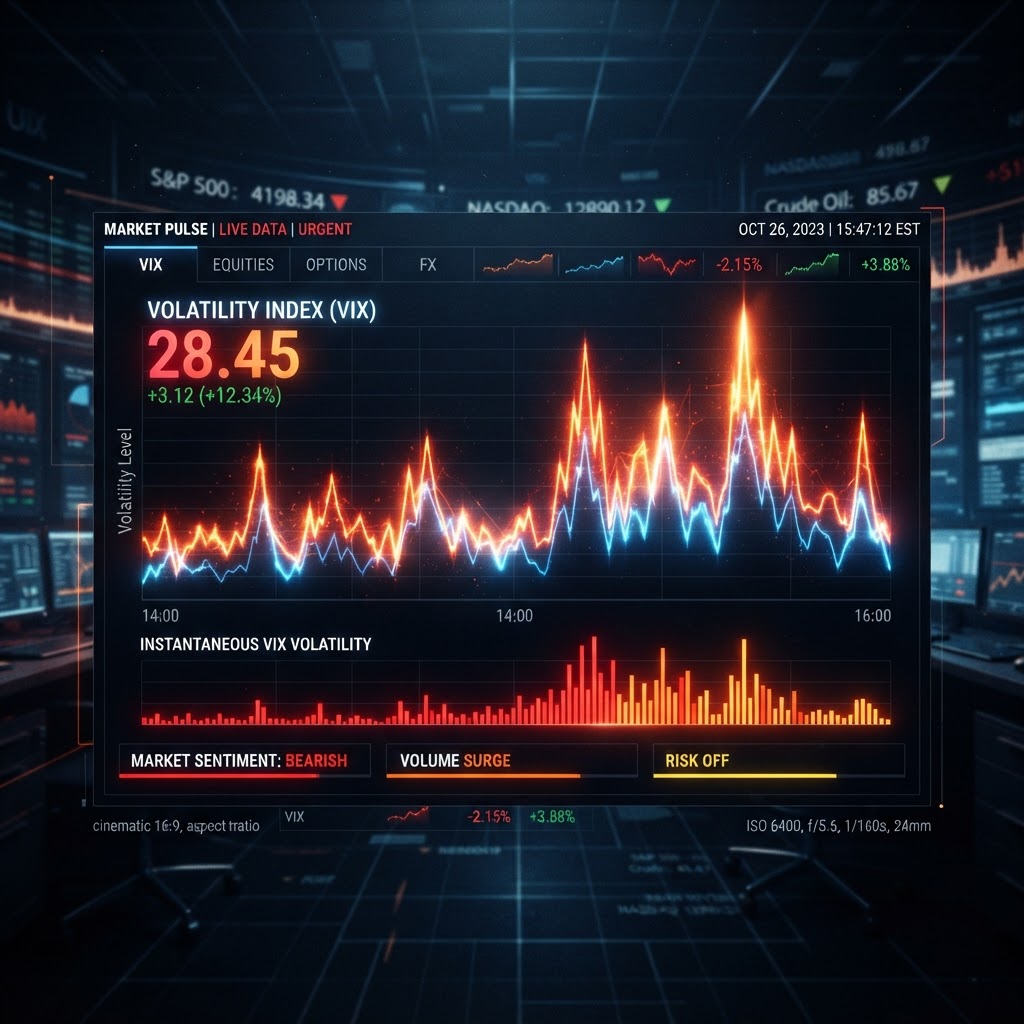
- The India VIX serves as a real-time barometer for market expectations regarding volatility over the next 30 days.
- A rising VIX typically signals increased market uncertainty, while a falling VIX often points to relative stability or complacency.
- It is derived from the order book of Nifty 50 options, acting as a forward-looking indicator rather than a historical chart.
- Investors should use it as a sentiment gauge, not a predictive tool for price direction.
What is the India VIX?
In the landscape of Indian equity markets, the India VIX—or the Volatility Index—is frequently cited by analysts as the 'fear gauge' of the market. It is an index based on the Nifty 50 Index option prices, providing a snapshot of the market's expectation of volatility over the next 30 calendar days. Unlike price charts that show where the market has been, the VIX is a forward-looking metric that distills the collective sentiment of market participants into a single percentage number.
Why It Matters: Interpreting Market Sentiment
When the India VIX trends upward, it suggests that market participants are paying higher premiums for Nifty 50 options. This usually happens when there is significant anxiety or uncertainty regarding impending economic data, geopolitical events, or corporate earnings seasons. Conversely, when the VIX remains low or compressed, it indicates a period where the market expects relatively stable price movements. It is important to note that the VIX does not predict the direction of the market; it only quantifies the intensity of expected fluctuations.
The Bigger Picture: Understanding Risk Perception
For the retail investor, the India VIX serves as a crucial tool to calibrate risk management. In periods of extreme market stress, an elevated VIX reflects a market that is pricing in a high probability of sharp moves in either direction. For those with long-term investment horizons, these spikes in volatility often differentiate between 'normal' market fluctuations and periods of genuine panic. Understanding this indicator prevents knee-jerk reactions, as it frames short-term market noise within the context of implied volatility rather than fundamental valuation changes.
What to Watch Next
As you monitor the markets, observe how the India VIX interacts with major events like Union Budget announcements or central bank policy shifts. Tracking the VIX in relation to the Nifty 50’s price performance can help you distinguish between a healthy bull market and one where complacency may be setting in. Always remember that the index is a mathematical construct based on options pricing, making it a reflection of professional market participants' hedges rather than a crystal ball for your portfolio.
⚠️ Disclaimer: IndiaMarketInsights.com is NOT a SEBI-registered Investment Adviser, Research Analyst, or Investment Advisory firm. This article is published for educational and informational purposes only and does not constitute investment advice, an offer to buy or sell, or a recommendation of any security or financial product. All data and information referenced is sourced from publicly available news and filings. Please consult a SEBI-registered investment advisor before making any investment decision. Past performance is not indicative of future results. Investing in securities involves risk, including possible loss of principal.